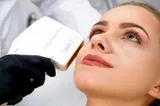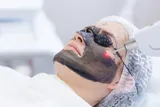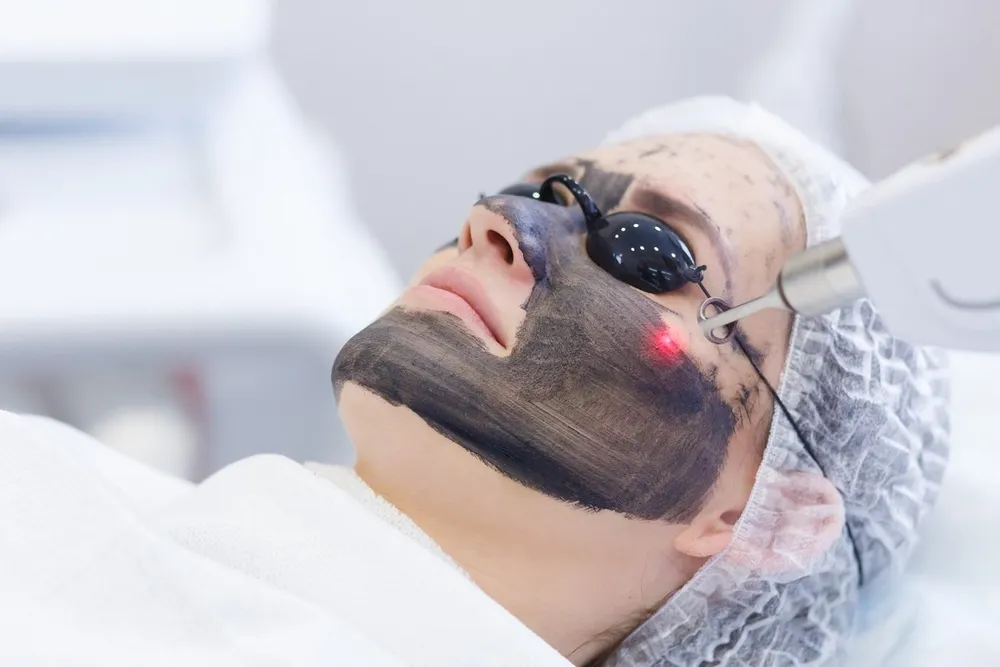
The Q-Switched Nd:YAG laser represents advanced technology for treating various pigmentation disorders. As a non-ablative laser, it targets pigment deep within the skin without breaking the surface, offering effective treatment with minimal downtime.
The laser delivers light at two specific wavelengths:
1064nm Wavelength - Penetrates deeper into the skin, targeting:
532nm Wavelength - Targets superficial pigmentation:
The “Q-Switched” technology delivers ultra-short pulses (nanoseconds) of high-energy light. This energy is absorbed by melanin, causing the pigment to shatter into tiny fragments that your body naturally eliminates over time.
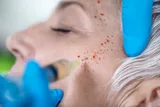
During Treatment: Brief snapping sensation with each pulse Immediately After: Temporary whitening of treated areas, mild redness Days Following: Treated spots may darken before gradually lightening Over Weeks: Progressive fading as body clears fragmented pigment
Treatment time: 15-30 minutes Sessions needed: 4-8 sessions, 4-6 weeks apart Results timeline: Visible improvement 2-4 weeks after each session
Achieve clearer, more even-toned skin with Q-Switched Nd:YAG laser treatment. Schedule your consultation for a personalized assessment of your pigmentation concerns.
The laser delivers ultra-short pulses of light that are absorbed by melanin (pigment) in the skin. This energy breaks down pigment particles, which are then naturally cleared by your body's immune system over the following weeks.
Most patients describe the sensation as a rubber band snapping against the skin. Topical numbing cream can be applied beforehand for comfort. The treatment is brief and well-tolerated.
The number of sessions varies by condition. Superficial pigmentation may need 2-4 sessions, while deeper conditions like melasma may require 6-8 or more sessions, spaced 4-6 weeks apart.
There is minimal downtime. You may experience temporary redness and the treated area may appear darker initially before lightening. Most patients return to normal activities immediately.
Yes, the Nd:YAG laser is safe for all skin types, including darker skin tones. The 1064nm wavelength minimizes the risk of post-inflammatory hyperpigmentation.